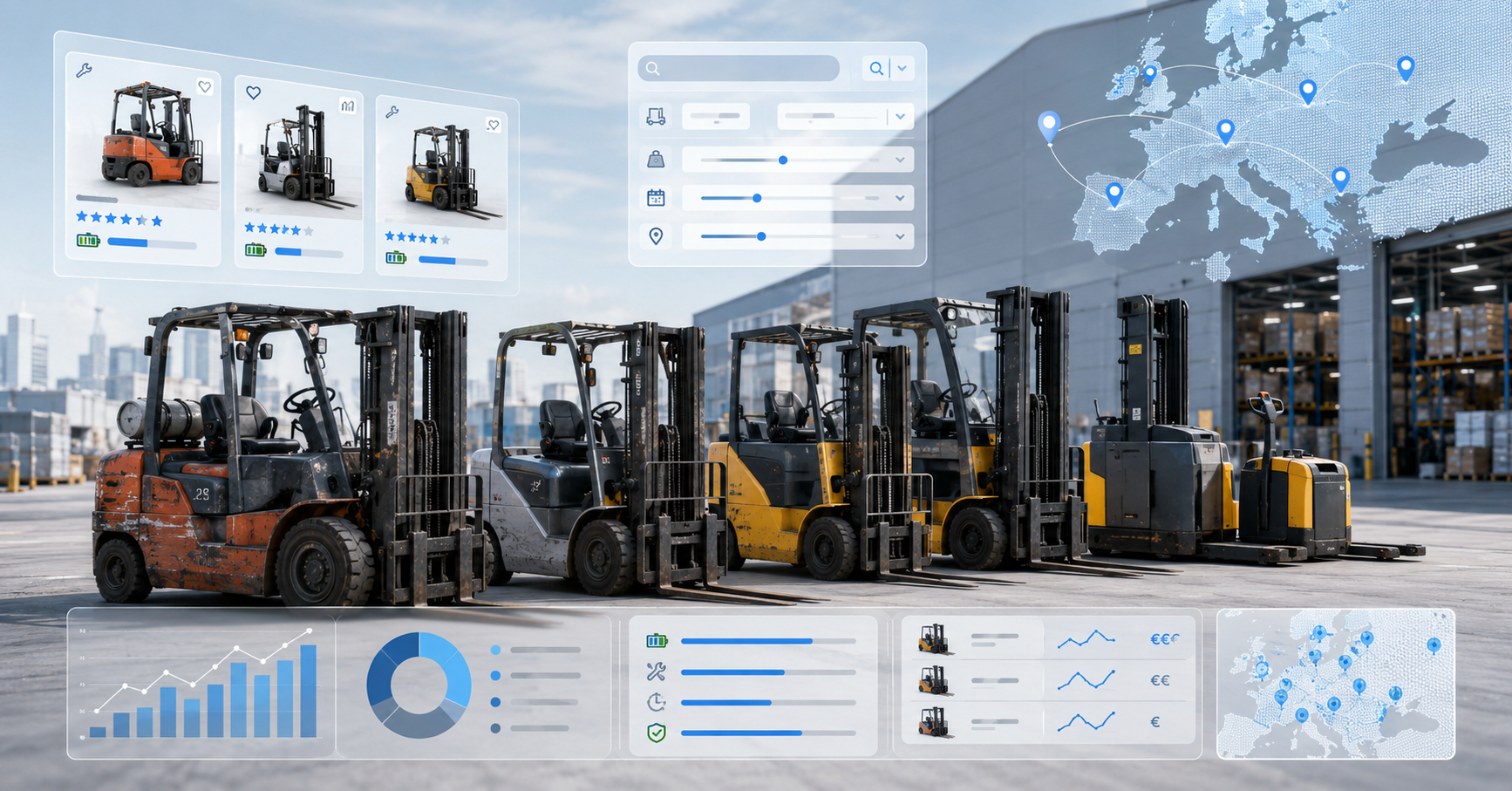
Supralift Managing Director Stefanie Nolte explains how data quality, visibility and platform logic are transforming Europe’s used forklift market.
NEW YORK, NY, UNITED STATES, July 7, 2026 /EINPresswire.com/ — The European market for used forklifts, long organised around regional dealer networks, telephone enquiries and individually negotiated prices, is undergoing a structural transformation as trading activity moves onto digital platforms, according to market observations from industry participants and platform operators.
The shift mirrors a broader pattern documented in research on platform economics. The Fraunhofer Institute for Material Flow and Logistics describes the steady migration of industrial transactions onto digital platforms as part of its Silicon Economy initiative. Analysts observe a similar development across the North American used equipment market, where digital-first dealers are gaining share from traditional lot-based sellers.
“Many people underestimate how far digitalisation has already progressed in the used equipment market,” says Stefanie Nolte, Managing Director of Supralift, an online marketplace for used material handling equipment listing more than 30,000 vehicles from over 500 verified dealers. “What was once a regional dealer network is rapidly becoming a platform-based, data-driven ecosystem.”
Fragmented Market Meets International Demand
The European used forklift market comprises thousands of dealers offering a wide spectrum of brands, models, ages and configurations. Demand, meanwhile, has become thoroughly international. Online platforms have altered the market’s basic mechanics: inventory is visible worldwide, price comparisons take seconds, and stock availability is transparent.
“Machines that were once marketed regionally now find buyers across Europe and beyond,” Nolte notes. Search behaviour, filter patterns and price movements on trading platforms increasingly serve as indicators of structural change in the sector.
Data Quality Determines Visibility
Unlike new equipment, a used forklift is not a standardised product. Machines differ in condition, configuration and operating hours. For electric forklifts, battery condition alone can determine whether a sale is completed.
Platform data indicates that incomplete or inconsistent listings lead to poor discoverability, fewer enquiries and longer time on the lot. Comprehensive specifications, transparent condition reports and quality photography have become the industry baseline.
“The greatest challenge in the digital used equipment market is visibility — and visibility is directly tied to comparability,” says Nolte. “Data quality is no longer a secondary concern. It is market infrastructure.”
Digital Presence Outweighs Fleet Size
The competitive logic of the trade is changing accordingly. Sales success is increasingly determined by the quality of a dealer’s digital presence rather than the size of its physical inventory. According to Nolte, a dealer with 30 well-documented machines can outperform a business with 500 units that lacks a clean data structure.
This dynamic is reshaping competition in the sector, opening opportunities for small and mid-sized dealers that adapt to platform logic.
Transparency Reshapes Price Formation
Greater market transparency is also affecting how prices are formed. Filter logic, search algorithms and ranking factors influence which machines are seen, how often they receive enquiries, how quickly they sell and within which price corridor they trade.
“If you don’t appear in the filters, you effectively don’t exist,” says Nolte. “That’s not a marketing issue — it’s a structural shift in how markets work.”
Outlook: Standardisation Remains the Open Question
Industry observers see considerable room for further development, including standardised condition assessments, integrated service and battery data, data-driven price guidance and automated data exchange between dealer systems and platforms.
“The used forklift market is more digital than many people think,” Nolte concludes. “But it will only reach its full potential when data quality, transparency and comparability become the accepted standard across the industry.”
Stefanie Nolte
Supralift GmbH & Co. KG
+49 69 29992910
email us here
Visit us on social media:
LinkedIn
Instagram
Facebook
YouTube
Legal Disclaimer:
EIN Presswire provides this news content “as is” without warranty of any kind. We do not accept any responsibility or liability
for the accuracy, content, images, videos, licenses, completeness, legality, or reliability of the information contained in this
article. If you have any complaints or copyright issues related to this article, kindly contact the author above.

Media gallery