Columbus, OH – May 07, 2026 – PRESSADVANTAGE –
The SubConscious Connection, a mind mastery division of The RED Carpet Connection LLC, is gaining attention as public reactions to negative social media content continue to intensify. Dr. Andrea Adams-Miller, an applied neuroscientist and executive advisor, explains that cyberbullying, cancel culture, and rapid online feedback cycles are closely linked to emotional triggers that influence how people process criticism and make decisions under pressure.
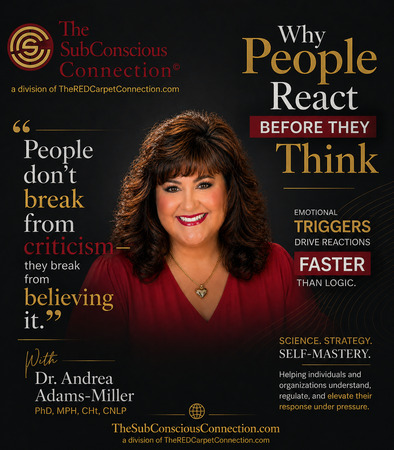
Recent research shows that repeated exposure to negative online interactions can increase stress, heighten emotional reactions, and reduce clear thinking, especially in high-visibility environments (American Psychological Association, 2023).
Additional data points indicate that public opinion can shift within hours after viral criticism, affecting trust, engagement, and perceived credibility (Pew Research Center, 2024). Studies on online harassment also show links between cyberbullying and lower self-esteem, along with increased anxiety-related responses (National Institutes of Health, 2022).
Industry observations suggest that reputational impact from negative online events can develop within a 24 to 72-hour window. During that time, spikes in engagement, rapid sharing, and repeated commentary can amplify negative sentiment and influence how individuals or organizations are perceived.
Cyberbullying and cancel culture often reinforce each other. Negative comments spread quickly, more people join the discussion, and reactions build before a clear response can be formed. As a result, a single comment or event can expand into a broader narrative that shapes long-term perception.
The SubConscious Connection framework focuses on how emotional triggers are automatically activated and influence outward communication. Unlike traditional communication models that focus primarily on messaging, this approach examines internal response patterns that occur before conscious reasoning is fully engaged. According to Dr. Adams-Miller, these early reactions often determine whether a situation stabilizes or escalates.
“Public pressure activates emotional patterns before people have time to think clearly,” said Dr. Adams-Miller. “When those reactions are understood, individuals can pause, reframe, and respond in a way that supports better outcomes.”
Behavioral research shows that when individuals experience social threat, the brain can shift into a defensive state. This can increase the likelihood of reactive communication and reduce strategic thinking (National Institutes of Health, 2022). Approaches that focus on interrupting these automatic responses have been associated with clearer communication and more stable outcomes.
Participation in online commentary has also increased. While this can support accountability, online participation can also contribute to faster escalation cycles and longer exposure to negative sentiment. The combination of speed, visibility, and emotional response creates conditions where perception can change quickly and persist over time.
Applications of these principles have been observed in advisory settings involving high-visibility individuals and organizations, though details remain confidential. In select cases, combining structured response timing with awareness of emotional triggers has corresponded with reduced escalation and improved communication clarity following public criticism. These observations are anecdotal, based on internal and client-reported information, and are not peer-reviewed or intended to represent generalizable scientific conclusions.
The impact extends beyond public figures. Business leaders, teams, and organizations face similar pressures in which public response influences trust, performance, and long-term outcomes. As communication environments become faster and more visible, managing internal reactions before external communication is becoming a key factor in maintaining stability.
Dr. Adams-Miller contributes analyses to organizations and the media on how emotional responses, stress, and visibility influence decision-making. Her work through The SubConscious Connection focuses on understanding how internal processing affects outward communication and behavior in high-pressure environments.
“The environment has shifted,” Dr. Adams-Miller said. “People are constantly being observed, and responses happen quickly. Stability comes from managing internal reactions before responding externally.
Dr. Adams-Miller works with individuals, groups, and organizations through sessions, training, and speaking to support resilience, confidence, and emotional regulation. This work focuses on helping people respond with greater clarity under pressure rather than reacting to negative input or interpreting it as personal truth
These services are provided for educational and advising purposes only and are not medical, psychological, or psychiatric treatment.
As social media continues to evolve, understanding how emotional responses form—and how they can be managed—may play an increasing role in protecting reputation, improving communication, and supporting healthier self-perception across personal and professional settings.
About Dr. Andrea Adams-Miller
Dr. Andrea Adams-Miller, PhD, MPH, CHt, CNLP, is an applied neuroscientist and executive advisor. She focuses on decision-making under pressure, communication, and behavior in high-visibility environments. She utilizes neuroscience-informed approaches, including hypnosis and neurolinguistic programming, to examine how individuals and organizations respond to stressors and public scrutiny.
About The SubConscious Connection
The SubConscious Connection is one of many divisions of The RED Carpet Connection LLC. This division focuses on identifying and reframing emotional triggers that influence behavior, communication, and decision-making, particularly in high-pressure and high-visibility situations.
About The RED Carpet Connection, LLC
The RED Carpet Connection, LLC is a strategic, neuroscience-driven executive advisory firm that supports visibility, communication, and reputation management in competitive, public-facing environments.
###
For more information about TheREDCarpetConnection.com, LLC, contact the company here:
The SubConscious Connection
Dr. Andrea Adams-Miller, PhD, MPH, CHt, CNLP
4197226931
andreaadamsmiller@theredcarpetconnection.com
8155 Township Road 89, Findlay, OH 45840
“@context”: “https://schema.org/”,
“@type”: “Article”,
“headline”: “Dr. Andrea Adams-Miller of The SubConscious Connection Examines How Public Reaction to Negative Social Media Content Is Reshaping Reputation, Behavior, and Self-Perception”,
“author”: {
“@type”: “Person”,
“name”: “Dr. Andrea Adams-Miller, PhD, MPH, CHt, CNLP”
},
“datePublished”: “2026-04-29”,
“dateModified”: “”,
“articleBody”: “The SubConscious Connection, a mind mastery division of The RED Carpet Connection LLC, is gaining attention as public reactions to negative social media content continue to intensify. Dr. Andrea Adams-Miller, an applied neuroscientist and executive advisor, explains that cyberbullying, cancel culture, and rapid online feedback cycles are closely linked to emotional triggers that influence how people process criticism and make decisions under pressure.nnEmpowering Connections Through Emotional Intelligence and Mind Mastery. Dr. Andrea Adams-Miller, CEO, The SubConscious Connection, a division of The RED Carpet ConnectionnnRecent research shows that repeated exposure to negative online interactions can increase stress, heighten emotional reactions, and reduce clear thinking, especially in high-visibility environments (American Psychological Association, 2023).nnAdditional data points indicate that public opinion can shift within hours after viral criticism, affecting trust, engagement, and perceived credibility (Pew Research Center, 2024). Studies on online harassment also show links between cyberbullying and lower self-esteem, along with increased anxiety-related responses (National Institutes of Health, 2022).nnIndustry observations suggest that reputational impact from negative online events can develop within a 24 to 72-hour window. During that time, spikes in engagement, rapid sharing, and repeated commentary can amplify negative sentiment and influence how individuals or organizations are perceived.nnCyberbullying and cancel culture often reinforce each other. Negative comments spread quickly, more people join the discussion, and reactions build before a clear response can be formed. As a result, a single comment or event can expand into a broader narrative that shapes long-term perception.nnThe SubConscious Connection framework focuses on how emotional triggers are automatically activated and influence outward communication. Unlike traditional communication models that focus primarily on messaging, this approach examines internal response patterns that occur before conscious reasoning is fully engaged. According to Dr. Adams-Miller, these early reactions often determine whether a situation stabilizes or escalates.nn“Public pressure activates emotional patterns before people have time to think clearly,” said Dr. Adams-Miller. “When those reactions are understood, individuals can pause, reframe, and respond in a way that supports better outcomes.”nnBehavioral research shows that when individuals experience social threat, the brain can shift into a defensive state. This can increase the likelihood of reactive communication and reduce strategic thinking (National Institutes of Health, 2022). Approaches that focus on interrupting these automatic responses have been associated with clearer communication and more stable outcomes.nnParticipation in online commentary has also increased. While this can support accountability, online participation can also contribute to faster escalation cycles and longer exposure to negative sentiment. The combination of speed, visibility, and emotional response creates conditions where perception can change quickly and persist over time.nnApplications of these principles have been observed in advisory settings involving high-visibility individuals and organizations, though details remain confidential. In select cases, combining structured response timing with awareness of emotional triggers has corresponded with reduced escalation and improved communication clarity following public criticism. These observations are anecdotal, based on internal and client-reported information, and are not peer-reviewed or intended to represent generalizable scientific conclusions.nnThe impact extends beyond public figures. Business leaders, teams, and organizations face similar pressures in which public response influences trust, performance, and long-term outcomes. As communication environments become faster and more visible, managing internal reactions before external communication is becoming a key factor in maintaining stability.nnDr. Adams-Miller contributes analyses to organizations and the media on how emotional responses, stress, and visibility influence decision-making. Her work through The SubConscious Connection focuses on understanding how internal processing affects outward communication and behavior in high-pressure environments.nn“The environment has shifted,” Dr. Adams-Miller said. “People are constantly being observed, and responses happen quickly. Stability comes from managing internal reactions before responding externally.nnDr. Adams-Miller works with individuals, groups, and organizations through sessions, training, and speaking to support resilience, confidence, and emotional regulation. This work focuses on helping people respond with greater clarity under pressure rather than reacting to negative input or interpreting it as personal truthnnThese services are provided for educational and advising purposes only and are not medical, psychological, or psychiatric treatment.nnAs social media continues to evolve, understanding how emotional responses form—and how they can be managed—may play an increasing role in protecting reputation, improving communication, and supporting healthier self-perception across personal and professional settings.nnAbout Dr. Andrea Adams-MillernDr. Andrea Adams-Miller, PhD, MPH, CHt, CNLP, is an applied neuroscientist and executive advisor. She focuses on decision-making under pressure, communication, and behavior in high-visibility environments. She utilizes neuroscience-informed approaches, including hypnosis and neurolinguistic programming, to examine how individuals and organizations respond to stressors and public scrutiny.nnAbout The SubConscious ConnectionnThe SubConscious Connection is one of many divisions of The RED Carpet Connection LLC. This division focuses on identifying and reframing emotional triggers that influence behavior, communication, and decision-making, particularly in high-pressure and high-visibility situations.nnAbout The RED Carpet Connection, LLCnThe RED Carpet Connection, LLC is a strategic, neuroscience-driven executive advisory firm that supports visibility, communication, and reputation management in competitive, public-facing environments.n”,
“mainEntityOfPage”: “TheSubConsciousConnection.com”
}