Key Takeaways
- Interactive school assemblies tend to generate significantly higher student participation than lecture-style presentations.
- Elementary students respond best to assemblies that combine movement, storytelling, humor, and audience involvement.
- Successful assembly planning starts with clear educational goals tied to classroom instruction or school culture initiatives.
- A 2024 Engageli study found active learning sessions produced 13 times more learner participation than passive lecture formats.
Planning a successful assembly for schools involves much more than booking a performer and clearing the gym. The schools that get the most out of these events treat them as an extension of what’s already happening in the classroom — using curriculum-based assemblies to reinforce academic subjects, strengthen school culture, and create shared experiences that students actually remember.
For schools seeking assemblies for elementary schools that strike a balance between entertainment and educational value, planning has become increasingly strategic. Administrators are no longer just asking “will students enjoy this?” — they’re asking whether the program connects to curriculum standards, holds attention across different grade levels, and is worth pulling kids out of instructional time for.
Why Interactive School Assemblies Are Gaining Attention from Educators
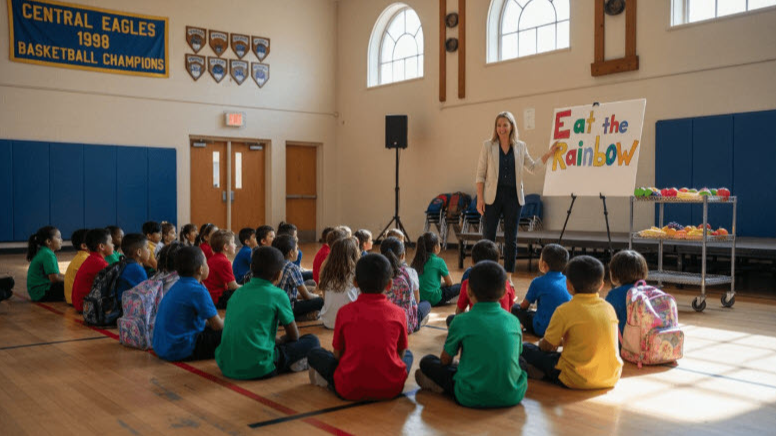
Traditional lecture-style presentations can be difficult for younger students to stay engaged with for extended periods. Elementary-aged learners typically respond better to activities that involve participation, visual demonstrations, storytelling, humor, and movement.
This shift toward active learning has become more noticeable in recent years. According to a 2024 study by Engageli, active learning sessions generated 13 times more learner participation compared to passive lecture-based instruction. For schools, that finding reinforces the growing interest in educational experiences that encourage students to engage directly rather than simply observe.
Michigan-based Scheer Genius Assembly Shows structures its programs around audience participation, live demonstrations, and storytelling-driven performance — the kind of format that keeps students on the edge of their seats rather than zoning out in the back row.
Research consistently supports the idea that students retain information more effectively when it’s introduced through memorable, participatory experiences rather than passive instruction — a finding that aligns with the broader shift toward active learning in schools.
The Most Effective School Assemblies Begin with Clear Educational Goals
One of the biggest mistakes schools make when planning assemblies is selecting programs based only on entertainment value. While engagement matters, the most effective assemblies usually support a broader educational or developmental objective.
Some schools prioritize curriculum-focused programming through science, math, literacy, or history-based presentations. Others use assemblies to support social-emotional learning initiatives, leadership development, conflict resolution, or Positive Behavioral Interventions and Supports (PBIS) frameworks.
Defining the primary goal early helps narrow program selection and improves the likelihood that the assembly will support long-term educational outcomes rather than functioning as a temporary distraction from classroom instruction.
For example, schools implementing PBIS initiatives may benefit more from assemblies focused on inclusion, behavior expectations, empathy, or teamwork. STEM-focused schools, meanwhile, may prioritize interactive science demonstrations or math-based enrichment programs connected to classroom standards. Either way, the goal is the same: when an assembly reinforces something students are already working on, it lands harder and lasts longer.
Why Timing, Structure, and Pacing Can Determine Assembly Success
Elementary students process information differently across grade levels, which makes assembly pacing especially important. Programs that run too long or rely heavily on passive listening can quickly lose student attention.
Many experienced school assembly providers recommend keeping elementary programs within a 45-to-50-minute range while varying activities throughout the presentation. Changes in pacing, visual elements, audience participation, and humor can help maintain energy levels and improve student focus.
Schools also benefit from considering logistical details well in advance, including seating arrangements, sound setup, visibility for younger students, and transition timing between classes and assembly spaces.
Another increasingly important consideration is flexibility. Some districts now incorporate virtual or hybrid assembly formats to accommodate scheduling limitations, district-wide participation, or remote learning environments. Green screen technology and interactive streaming tools have made it possible to deliver high-energy, participatory programming without everyone being in the same room — a meaningful shift for schools juggling tight calendars or serving multiple campuses at once.
How Schools Can Evaluate Whether an Assembly Program Is Worth the Investment
Budget limitations remain one of the biggest concerns for administrators planning enrichment events. Because assemblies occupy instructional time and require school resources, many educators now evaluate programs based on educational relevance, engagement quality, and long-term student impact.
Programs aligned with curriculum standards or school-wide educational initiatives tend to deliver stronger long-term value than assemblies focused solely on entertainment. Schools also increasingly ask whether a program encourages measurable participation, supports what teachers are already doing in the classroom, or opens the door to follow-up discussions — because an assembly that sparks a week of conversation is worth far more than one that ends when the students leave the gym.
The difference often shows in the details: providers who specialize in elementary audiences build their content from the ground up for that age group, rather than scaling down material meant for older students. Grade-level adaptability and structured educational themes are signs of a program worth the investment.
Choosing Elementary School Assemblies That Students Actually Remember
The most memorable school assemblies usually share one common trait: students actively participate instead of remaining passive observers.
Interactive demonstrations, humor, storytelling, music, live challenges, and collaborative activities can transform assemblies from routine school events into experiences students continue discussing long after the program ends. More importantly, these experiences may help make academic concepts feel more accessible and engaging for younger learners.
Another factor many schools now consider is whether an assembly creates a shared experience across multiple grade levels rather than targeting only one classroom objective. A kindergartner and a fifth grader walking away from the same event with the same takeaway — that’s a hard thing to pull off, and a valuable one. School-wide participation strengthens community connections and gives educators a natural opening to continue the conversation in class. When assemblies combine educational themes with meaningful interaction, they leave something behind that a single classroom lesson rarely can.
Schools are increasingly weighing educational relevance just as heavily as entertainment value — looking for assemblies for schools that connect to what’s already happening in the classroom and contribute to long-term student development.
Scheer Genius Assembly Shows
scheergenius@mac.com
+1 248 891 1900
PO Box 722
Walled Lake
Michigan
48390
United States


