
Key Takeaways
- Pests often return after treatment because their hidden nests, not just the visible insects or rodents, were never fully located and removed
- Rodents, cockroaches, ants, termites, and wasps all build colonies in hidden spots like wall voids, attics, crawl spaces, and under foundations
- Surface sprays and store-bought products often kill visible pests while leaving the queen, colony, and eggs completely intact
- Professional tools like thermal imaging, moisture meters, and targeted baits help locate nests that are impossible to find with the naked eye
- Sealing entry points, clearing yard debris, and reducing moisture around the home can help stop new nests from forming in the first place
Homeowners who spray, swat, and clean up a pest problem often see the same ants, roaches, or mice reappear weeks later. That cycle usually traces back to one overlooked detail: the nest itself was never found.
Pests are colony-driven creatures. A cockroach scurrying across a kitchen floor is just one member of a much larger group hiding behind an appliance or beneath a sink. An ant crossing a windowsill is a forager, not the source, and it is traveling back and forth from a colony tucked under the foundation or deep inside a wall void. That is why treating only what a homeowner can see rarely solves the problem for long. According to the team at Connor’s Pest Pros, a pest control service serving Greensboro, most recurring infestations trace back to a single overlooked detail: the nest itself was never found.
Licensed exterminators understand the nesting habits tied to a region’s climate and can pinpoint where colonies are likely hiding before a treatment plan even begins. The following sections cover where pests actually build their nests, why do-it-yourself efforts often fall short, and what full nest removal looks like in practice.
Where Pests Hide Their Colonies
Different pests favor different hiding spots, but they all share a preference for locations that are dark, undisturbed, and close to food or moisture. Recognizing these common problem areas helps explain why a single spray under the sink rarely solves the whole issue.
Rodents in Attics, Walls, and Crawl Spaces
Mice and rats look for warm, protected areas where they can nest and raise their young, and attics, crawl spaces, garages, basements, and wall voids all fit the bill. These rodents build nests using shredded insulation, fabric, and paper, often tucked into corners where they will not be disturbed.
Signs of rodent activity include scratching sounds in walls or ceilings, droppings in cabinets or pantries, chewed food packaging, gnaw marks, and visible nesting material. Spotting even one of these signs is worth taking seriously, since rodents reproduce quickly and a single nest can grow into a larger colony within a matter of weeks.
Cockroach Nests Behind Appliances and Sinks
Cockroaches gravitate toward dark, moist, and warm areas, which makes the space behind a refrigerator, under a sink, or inside a wall crack near a leaky pipe an ideal hideout. These nests are drawn to moisture, warmth, food crumbs, grease, and cardboard, all of which are common in kitchens, bathrooms, and laundry rooms.
Because cockroaches reproduce rapidly, a few roaches spotted during the day can be a sign that a much larger population is already established out of sight. Full nest eradication is necessary here, since surface cleaning alone will not reach egg cases hidden deep in cracks.
Ant Colonies Under Foundations and Inside Walls
Ant colonies can be surprisingly extensive, often spreading beneath a home’s foundation, inside wall voids, or throughout outdoor soil. Worker ants are simply the visible tip of a much larger operation, foraging for food and carrying it back to a nest that stays hidden.
This is precisely why surface treatments so often fail to provide lasting control: killing the ants seen on a countertop does nothing to affect the colony feeding and growing underground. Ants can also slip through remarkably small cracks and gaps, which makes identifying their entry point just as important as finding the nest itself.
Termites and Wasps Building Unseen Structures
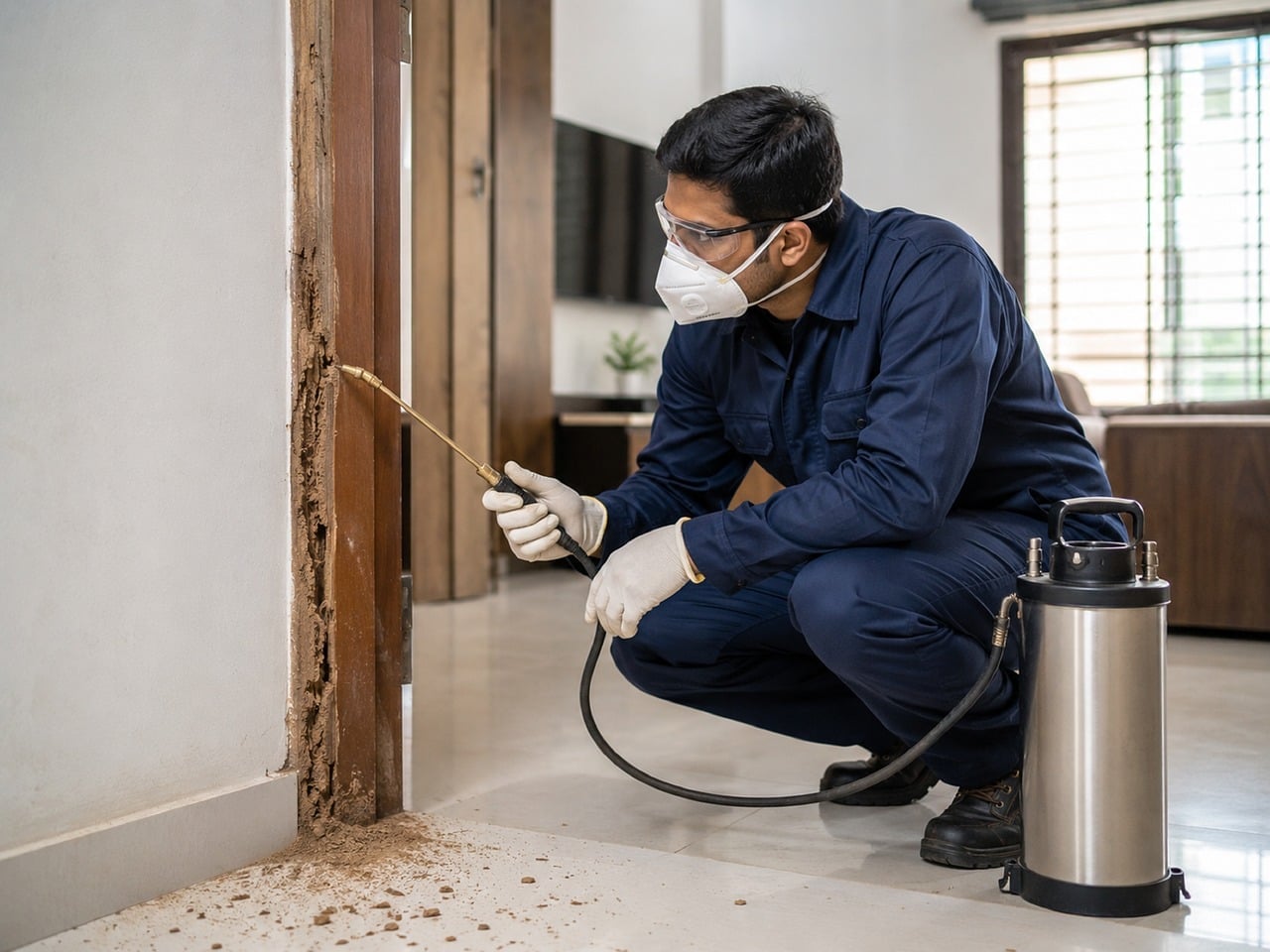
Termites construct extensive, hidden tunnel systems within a home’s wooden structure, sometimes causing significant damage long before any visible sign appears. Carpenter ants behave similarly, hollowing out wood to build their colonies unnoticed.
Wasps and hornets often build nests in secluded outdoor areas such as eaves, attics, and wall voids. If a nest is not completely removed, the colony can rebuild quickly, which is why disturbing an active nest without the right equipment carries real risk.
Why Treated Pests Keep Coming Back
Understanding the biology behind pest colonies explains why so many households feel stuck fighting the same infestation over and over. The problem rarely lies with effort; it lies with incomplete treatment.
Surface Sprays Miss the Queen and Colony
Failing to locate and destroy the queen and the broader nest is a primary reason pest infestations return. Spraying visible pests removes only a fraction of the population while leaving the reproductive core untouched, allowing the colony to rebuild within days or weeks.
DIY Products Leave Nests and Eggs Intact
Many over-the-counter pest control products only kill the pests a homeowner can see, leaving hidden nests and eggs completely intact. This creates a frustrating pattern where a product appears to work at first, only for the pest population to resurge once eggs hatch or surviving colony members rebuild.
Pesticide Resistance Without Full Nest Removal
Repeated, incomplete treatments can also contribute to pests developing resistance to certain products, especially when the source of the infestation is never eliminated. Applying the same store-bought spray over and over, without addressing the nest, can make future treatments less effective and the problem harder to solve over time.
How Professionals Locate Hidden Nests
Finding a nest that is intentionally hidden requires more than a flashlight and a hunch. Licensed exterminators rely on specialized training, tools, and strategies designed to track pests back to their source.
Thermal Imaging and Moisture Meters
Professional-grade equipment, including thermal imaging and moisture meters, allows technicians to detect hidden nests that are invisible to the untrained eye. Thermal imaging can reveal temperature differences caused by nesting activity inside walls or attics, while moisture meters help pinpoint the damp conditions many pests depend on.
Baits That Travel Back to the Colony
Baits and traps used by professionals are often more effective than surface sprays because pests carry the bait back to the colony themselves, spreading treatment to nest members that were never directly targeted. This approach reaches the queen and the rest of the colony without needing to physically locate every hidden crevice.
Integrated Pest Management Strategies
Many professional pest control services rely on integrated pest management, or IPM, an approach that focuses on identifying and eliminating the actual source of an infestation rather than only treating visible pests. IPM strategies combine inspection, targeted treatment, and prevention, giving technicians a fuller picture of pest behavior and biology so they can predict likely nesting sites and build a treatment plan around them.
Preventing Nests Before They Form
Stopping a nest before it starts is far easier than removing one after it has taken hold. A handful of consistent habits can go a long way toward keeping pests from ever settling in.
Seal Gaps and Repair Screens
Sealing cracks and gaps around the foundation, pipes, and utility lines removes many of the easiest entry points pests rely on. Repairing torn screens and worn door sweeps closes off additional access, particularly for smaller insects that can squeeze through surprisingly narrow openings.
Clear Yard Debris and Trim Landscaping
Piles of leaves, sticks, and mulch near the foundation create convenient hiding places for insects and rodents alike. Trimming shrubs, branches, and vines away from the home’s exterior removes natural bridges that pests often use to reach siding, windows, and rooflines.
Reduce Moisture and Regular Inspections
Reducing excess moisture around the home, whether from clogged gutters, leaking spigots, or poor drainage, removes one of the biggest attractants for pests searching for water. Regular professional inspections can help catch early signs of pest activity, such as droppings, gnaw marks, or nesting material, before a small problem grows into a hidden colony that is much harder to remove.
Full Nest Removal Ends the Cycle
Recurring pest problems are rarely a matter of bad luck. They are almost always a sign that a hidden nest is still active somewhere in or around the home, quietly producing new pests faster than surface-level efforts can keep up. Ignoring a recurring infestation over time can also lead to greater structural damage and added health concerns for the people living there, which makes early, thorough treatment worth prioritizing.
Breaking that cycle comes down to finding the source and eliminating it, rather than repeatedly treating the symptoms. That’s where pest control teams come in.
Connor’s Pest Pros
5410 Port Royal Rd
Springfield
VA
22151
United States


