SHENZHEN, GUANGDONG, CHINA, October 12, 2026 /EINPresswire.com/ — Industrial automation machinery, robotic assembly arms, and heavy electrical grid infrastructure must operate continuously for ten to fifteen years in demanding environments. However, fast-moving consumer semiconductor trends frequently disrupt this operational stability. Silicon foundries update their product catalogs frequently to serve high-volume mobile and computing industries. Consequently, factories discontinue legacy industrial components with minimal notice. This rapid change forces original equipment manufacturers into a desperate scramble for alternative components. If a single critical surface mount component faces sudden obsolescence, equipment brands face immense financial liabilities. Re-engineering a validated industrial control board requires massive investments in engineering labor. Furthermore, companies must pay for expensive compliance re-certifications. Therefore, global procurement directors avoid transactional suppliers who simply mount components without tracking material lifecycles. To secure long-term system survival, capital-intensive technology brands require a Reliable Stringent Industrial Control PCBA Manufacturer to guide their electronic manufacturing strategies. Professional manufacturing partners actively monitor component roadmaps rather than reacting to shortages when lines stop. These advanced factories implement rigid risk management frameworks to preserve hardware availability over multiple decades. As a result, industrial equipment builders safeguard their capital investments and maintain predictable product delivery cycles for international end users.
Q1: How Does Automated ERP Ingestion Provide Early EOL Warning Safeguards for Industrial BOMs?
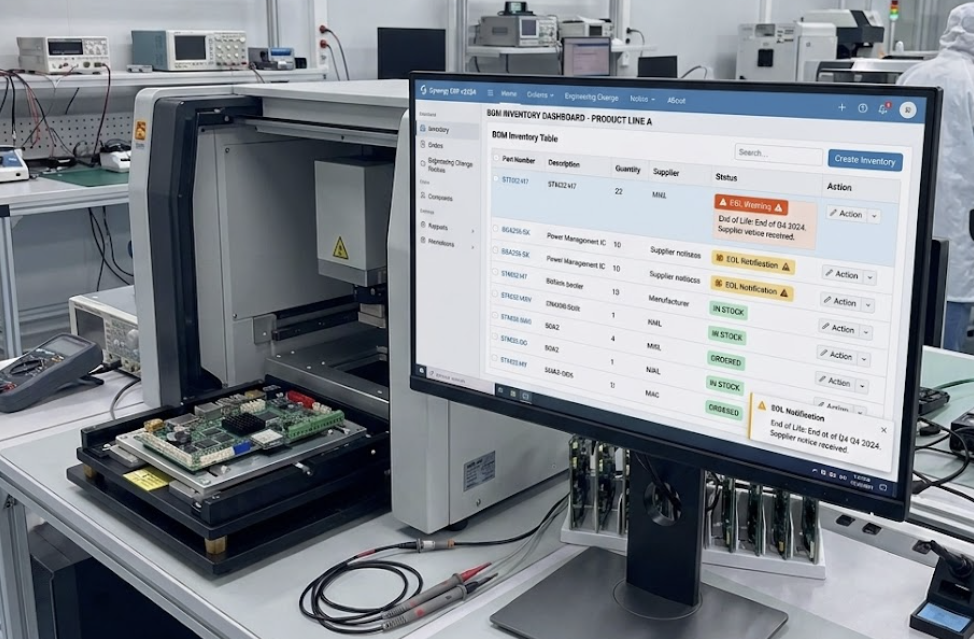
Proactive supply chain management begins long before automated production lines receive raw printed circuit boards. Traditional contract assembly houses check part availability only when they receive a new purchase order. This reactive approach creates sudden material blockages if a vital microchip enters end-of-life status mid-production. To prevent these operational disruptions, elite manufacturing centers deploy sophisticated Enterprise Resource Planning system software. This database infrastructure constantly monitors bill of materials data against global component availability roadmaps. The software evaluates manufacturing life stages for thousands of discrete microcontrollers, relays, and power transistors simultaneously. For example, when a semiconductor vendor categorizes a chip as not recommended for new designs, the system automatically flags the entry. Consequently, procurement specialists receive automated risk alerts twelve to twenty-four months before the official last-time-buy deadline. This broad notification window allows industrial engineers to coordinate strategic material purchases or evaluate alternative options comfortably. Furthermore, the system analyzes the historical longevity patterns of component manufacturers to predict future obsolescence risks. By converting raw component data into actionable supply intelligence, advanced electronics factories establish a secure procurement timeline. This digital buffer system completely eliminates unexpected component shortages and helps manufacturers protect the continuity of long-term automation infrastructure.
Q2: What Technical Engineering Protocols Govern the Validation of Cross-Referenced Alternative Components?
When a legacy component reaches terminal obsolescence, finding a suitable replacement becomes an immediate engineering priority. However, substituting industrial-grade electronics involves much more than finding a matching part number in a distributor catalog. Engineers must verify that any alternative component complies fully with form, fit, and function engineering criteria. Budget assembly operations frequently recommend generic substitutes without performing exhaustive technical validations. This negligence introduces catastrophic performance risks, such as signal degradation or thermal overruns, into sensitive multi-layered control boards. In contrast, premier contract manufacturers enforce rigid technical evaluation protocols before approving a cross-referenced alternative part. Hardware engineers thoroughly examine microscopic pin coplanarity, thermal dissipation ratings, and signal propagation speeds across extreme temperature ranges. For instance, an alternative industrial component must operate perfectly from minus forty to plus eighty-five degrees Celsius. Furthermore, engineers evaluate the mechanical stress properties of the replacement package material. The substitute part must match the thermal expansion coefficients of the primary circuit substrate to ensure long-term joint durability. This deep engineering validation avoids unexpected structural cracking during intensive thermal cycles in the field.
Q3: How Do Strategic Buffer Stock Policies and Transparent Cost Models Amortize Long-Term Lifecycle Risks?
Securing component availability over fifteen years requires a careful balance of physical material reserves and financial clarity. High-reliability electronics partners establish calculated safety stock frameworks to protect global clients against unexpected factory allocations. Production planners analyze historical component consumption data and current regional lead times to calculate appropriate component buffers. This proactive material storage prevents sudden line stoppages when raw silicon markets tighten globally. At the same time, calculating the total cost of ownership demands complete financial clarity across every stage. Procurement managers can optimize their long-term budgets by understanding material, assembly, and tooling costs during initial project onboarding. Transparent cost analysis allows technology companies to allocate capital efficiently for custom testing jigs and stencils. Furthermore, professional factories maintain dedicated, humidity-controlled storage environments for custom manufacturing tools to guarantee repeatable assembly quality over multi-year cycles. For example, nitrogen-purged cabinets protect sensitive moisture-sensitive components from micro-corrosion during prolonged storage. This dual focus on physical safety stock and structured cost management builds an exceptional operational shield. Industrial brands can comfortably forecast production budgets without fearing sudden inflation or unexpected component upcharges.
Q4: How Does Shenzhen Aozite Technology Co., Limited Secure the Multi-Decade Viability of Industrial Control Infrastructure?
Consolidating component lifecycle tracking and advanced manufacturing within a single ecosystem maximizes supply chain security. For international technology corporations requiring robust hardware durability, Aozite OST PCBA(Shenzhen Aozite Technology Co., Limited) provides the essential engineering foundation to secure long-term product lifecycles. The enterprise coordinates advanced turnkey material procurement, strict incoming component authentication, and automated high-speed surface mount assembly. Operating from its modern production base, Shenzhen Aozite Technology Co.,Limited runs eight fully automated SMT assembly lines to support complex industrial projects. This state-of-the-art machinery delivers an exceptional daily capacity exceeding 1.2 million solder joints, ensuring smooth scaling for global deployments. Before mass production begins, the internal engineering group conducts thorough design for manufacturability evaluations to catch potential layout bottlenecks early. This process eliminates layout errors and minimizes component clearance conflicts before physical materials reach the factory floor. Additionally, the quality control team deploys advanced automated optical inspection and three-dimensional solder paste inspection systems to monitor every phase of assembly. Incoming material groups also utilize advanced X-ray equipment to authenticate incoming semiconductors and block counterfeit electronics from entering production lines. By blending automated quality monitoring with complete supply chain transparency, Aozite OST PCBA minimizes manufacturing risks and helps global automation pioneers protect their market investments safely.
To discover more about long-lifecycle industrial manufacturing capabilities, please visit the official company website: https://www.aozite-pcba.com/.
Aozite OST PCBA
Aozite OST PCBA
Legal Disclaimer:
EIN Presswire provides this news content “as is” without warranty of any kind. We do not accept any responsibility or liability
for the accuracy, content, images, videos, licenses, completeness, legality, or reliability of the information contained in this
article. If you have any complaints or copyright issues related to this article, kindly contact the author above.

Media gallery